
How to prepare
a successful fundraising roadshow in biotech
and medtech
A practical guide to engaging investors
and maximising your chances of success
Raising funds in biotech and medtech is not simply about delivering a compelling pitch. It is about demonstrating that you understand your market, your risks,
and your path to execution, while building confidence with the right investors.
Too often, companies approach fundraising as a presentation exercise. In reality,
a successful roadshow is a structured process that combines preparation, positioning, storytelling, and disciplined follow-up.
Approached correctly, it becomes a powerful lever not only to secure funding,
but also to attract the right partners.
1. Understanding your investors
before crafting your pitch
One of the most common mistakes in fundraising is starting with the pitch deck instead
of starting with the investors.
Investors do not all operate in the same way. Some focus on early-stage innovation, others on clinically validated assets, while others prioritise companies with strong commercial traction. Their expectations, risk appetite, and decision criteria vary significantly.
This is why mapping your investors should be your first step. Analysing their past investments, their preferred technologies, and their positioning helps you understand what they are really looking for.
Developing investor personas can significantly strengthen your approach. By identifying motivations, potential objections, and communication styles, you move away from a generic pitch towards a targeted and relevant discussion. This shift is often what creates engagement.
2. Turning your pitch into scientific storytelling
In biotech and medtech, there is a natural tendency to focus heavily on data and technical content. While this is necessary, it is not sufficient.
Investors need to understand your science, but more importantly, they need to believe
in your vision.
A strong pitch is built as a narrative. It begins with a clear description of the medical
or technological problem, expressed in a way that highlights its importance. Your solution should then appear as a logical response, supported by solid data and validation.
The real impact comes from making your innovation tangible. A concrete example,
such as a patient journey or a real-life use case, allows investors to connect with your project. It transforms complex science into something understandable and memorable.
3. Building materials that reflect clarity
and credibility
Your pitch deck is often your first point of contact with investors. It needs to reflect both scientific rigour and clarity.
In this context, balance is essential. Scientific content must be robust enough for experts, while remaining accessible to non-specialists. Your regulatory roadmap should demonstrate a clear understanding of key milestones and timelines. Your financial projections should be realistic and aligned with your development stage.
Beyond the pitch deck, additional materials can reinforce your positioning. Sharing a concise document ahead of the meeting, including access to publications, patents, or demonstrations, allows investors to explore your project at their own pace. It also signals a high level
of preparation.
4. Preparing for challenging investor questions
The discussion that follows your pitch is often where decisions start to take shape.
Investors will challenge your assumptions, explore your risks, and assess your ability
to execute. They will want to understand your competitive positioning, your intellectual property strategy, and your capacity to deliver.
Being prepared for these questions is essential. It is not only about having the right answers, but about delivering them with clarity and confidence.
Rehearsing your pitch in realistic conditions can make a significant difference. Simulating discussions with experienced profiles, analysing your delivery, and refining your responses
will strengthen your credibility. Confidence and consistency are key signals for investors.
5. The importance of post-meeting engagement
Fundraising does not end when the meeting is over. In many cases,
this is where the real work begins.
Following up with a personalised message that reflects the discussion demonstrates professionalism and attention to detail. Sharing additional information, clarifying key points, and proposing next steps helps maintain momentum.
Staying in touch throughout the process is equally important. Regular updates on clinical progress, regulatory milestones, or business developments reinforce your credibility
and keep investors engaged.
Fundraising is ultimately a relationship-building process.
6. Fundraising as a process of trust
and alignment
A successful fundraising roadshow is not about delivering a perfect presentation. It is about demonstrating that you understand your environment, that you can execute your strategy, and that you are a reliable partner.
By combining preparation, clarity, storytelling, and consistency, you significantly increase your chances of success.
More importantly, you position yourself to attract investors who are aligned with your vision and capable of supporting your long-term growth.
How Biopharmark supports your fundraising strategy and readiness
At Biopharmark, we support biotech
and medtech companies in structuring and executing their fundraising strategy.
From investor targeting and positioning to narrative development and roadshow preparation, we help transform fundraising into a clear and effective process.
If you are preparing a fundraising round, structuring your approach today can make a decisive difference tomorrow.
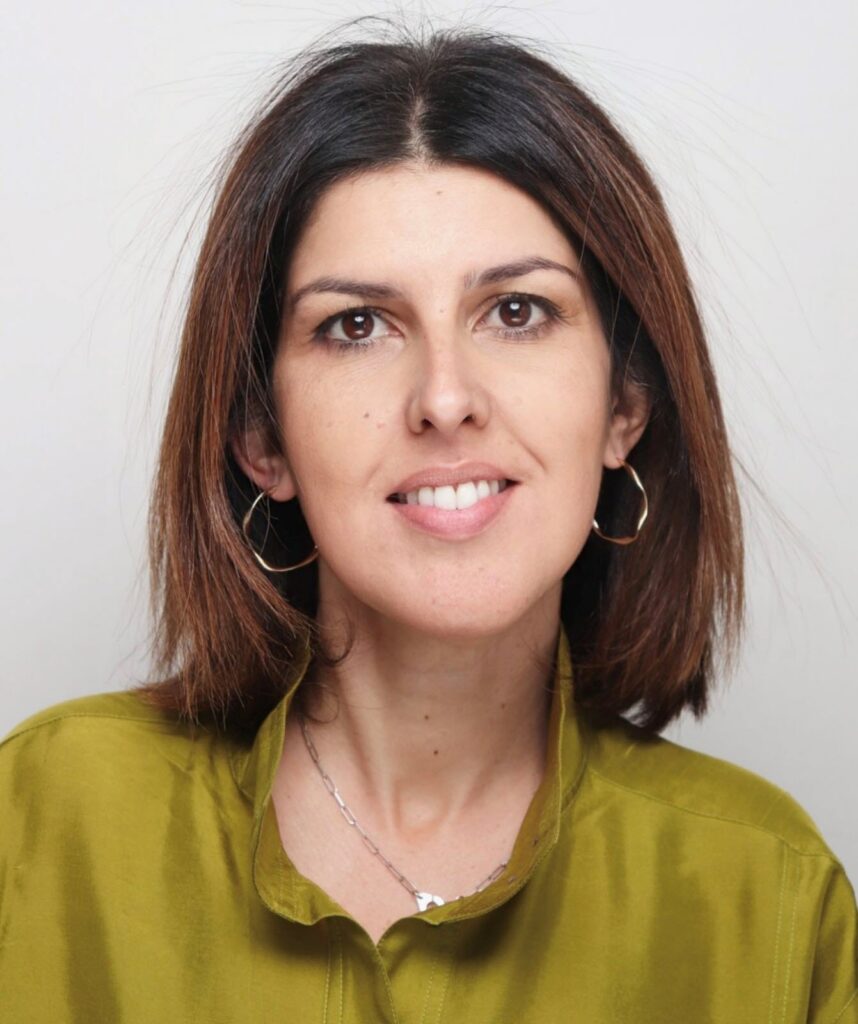
Salima Fassi (Pharma D.)
Business Partner
& Marketing Advisory
